
In this article, we’ll be discussing Valves for Changing the Pressure of a Fluid in a Suspension and Retainer for Retaining Fluid in a Suspension by Eko Sport, Inc. (MRP), US publication 20240217614. The publication date is July 4th, 2024 and the filing date is Dec. 20th, 2023.

Brief Summary (tl;dr)
Eko Sport (MRP) are working on a few new things in this document.
The first being a variation of the Automatic Casting Valve (ACV) that was recently released a few months ago. This updated ACV is user-adjustable with a little dial on the back of the fork, that loads and unloads a spring against a ball. The user can control how high or low the inner fork leg pressure must be to automatically bleed.
The second thing here is a new fluid injection system called Fluid Introduction Valve. The fork lowers include a little threaded valve that attaches to an exterior plunger. The plunger allows the rider to add lubricating fluid to the lowers without the need to take the fork apart, which I’m just giddy about. The injection is located right at the foam ring, so the ring can constantly be lubricated whenever the fork is feeling a bit sticky.
Lastly, interestingly enough, MRP are showing a new air shock with the same Fluid Introduction Valve, which could be a new lineup of rear shock to compliment their Hazzard coil shock.
Background
MRP is a small independent suspension and component company not far down I-70 from me in Grand Junction. These folks ‘design, test, build’ in Colorado, which I’m a big fan of – especially the build part. It’s nice to see some good ol’ red-blooded beer-drinkin ‘Murican manufacturing.

I have a lot of respect this company. I’ve personally never owned anything MRP outside of a chain guide (nice pieces) but they appear to stay focused, quiet, dig, and innovate (they have lots of patents). They have lots of fans and I’ve only ever heard good things about their customer service, which is shown below.
Their current lineup consists of an array of forks from Gravel to DH, chain guides, and fork upgrades. With respect to their forks, and related to this document, they recently released a new bleeder feature called an Automatic Casting Vent (ACV).
Long story short, their ACV allows the release of pressure from the lowers without user input. Once the internal pressure of the fork lowers reaches a certain level, the bleeder puffs out some air to maintain proper pressure.
So, while Fox and SRAM are having a peeing race with their bleeders, MRP have quietly developed their ACV and are possibly looking to update it at some point. Or this is DOA and we’re all wasting our time, who knows.
Intended Novelty
The intended novelty of this specific document appears to relate to a different version of MRP’s ACV, but because there’s a very specific feature in this document that I can’t find on the interwebs I had to look elsewhere. That specific feature is the user-adjustability.

To figure this out, I just messaged MRP to see if the current ACV version is adjustable. I’m actually going to do this more, this saved me a ton of time.
If you can’t tell, their customer service is great. I appreciate the info Eric5000. That being said, I’m not sure my boy is correct here. I’m pretty sure the valves allow the lowers to stay at atmospheric pressure, not 0 PSI. Atmospheric pressure in Grand Junction is like 12psi. Maybe he meant to say zero PSI delta between inside and outside.
Back to intended novelty – the system defined in this document looks to protect an automatic bleeder, just like the current ACV, but with an adjustment knob ‘…to adjust the release valve threshold…’. So, the user can adjust the pressure needed to activate the automatic valve. This isn’t granted so this could change in the future.
This is a big ass document with a bunch of shit in it, so I imagine there are a number of other things that MRP want to protect, so we’ll likely see some follow-up documents in the near future.
What
This is broken into three parts — vent, fluid injection, and shock.
Automatic [Adjustable] Casting Vent
Why: A user can select an appropriate opening force or release valve threshold that the user believes to be desirable for a particular riding location and condition.
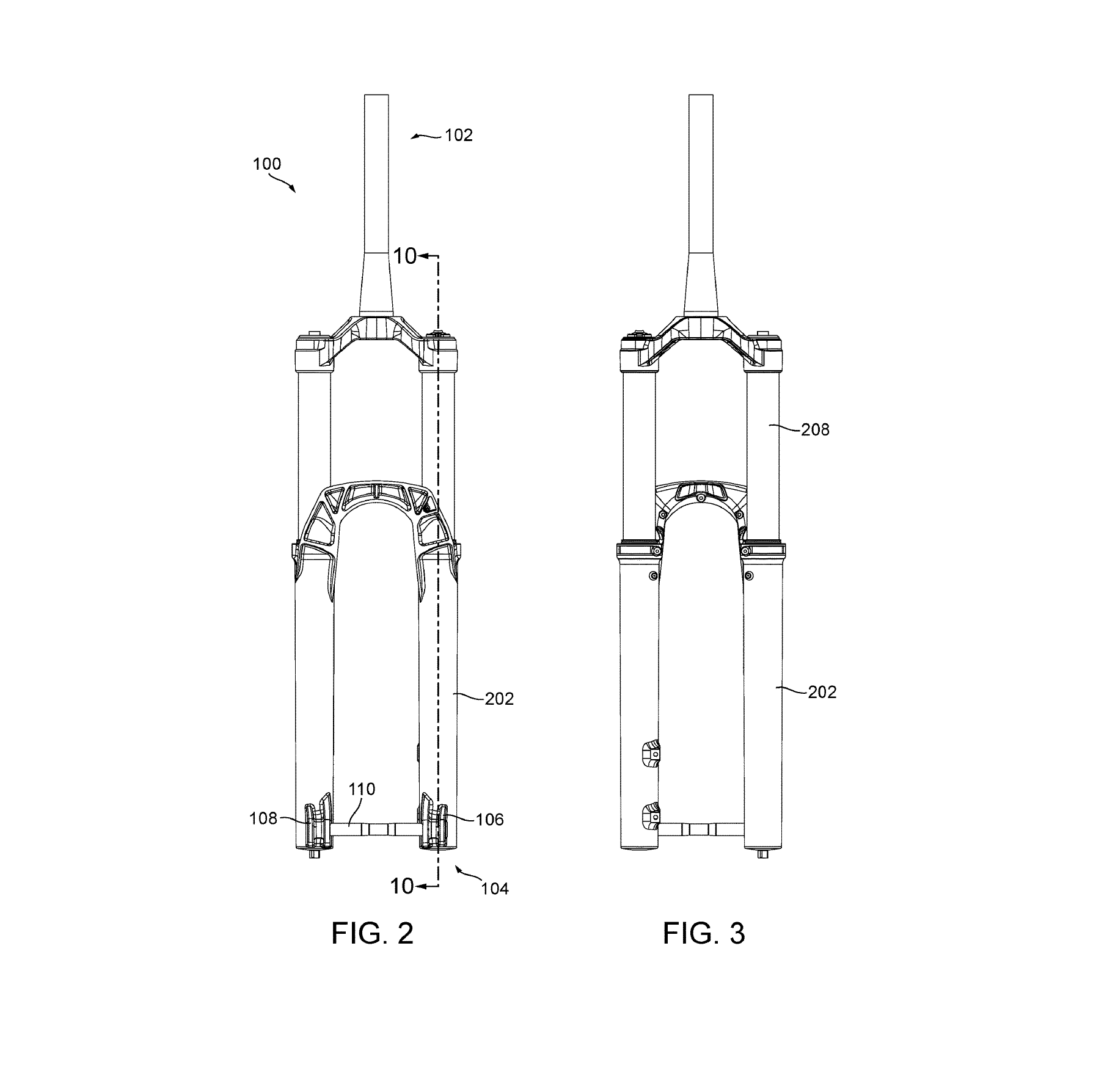
FIGs. 2 and 3 show this new fork. From an immediate visual perspective, there’s nothing really new here. It’s got a normal steerer, crown, stanchions, lower, all that jazz. But really, FIG. 3 shows the tiny little vent dingle we’re focusing on.

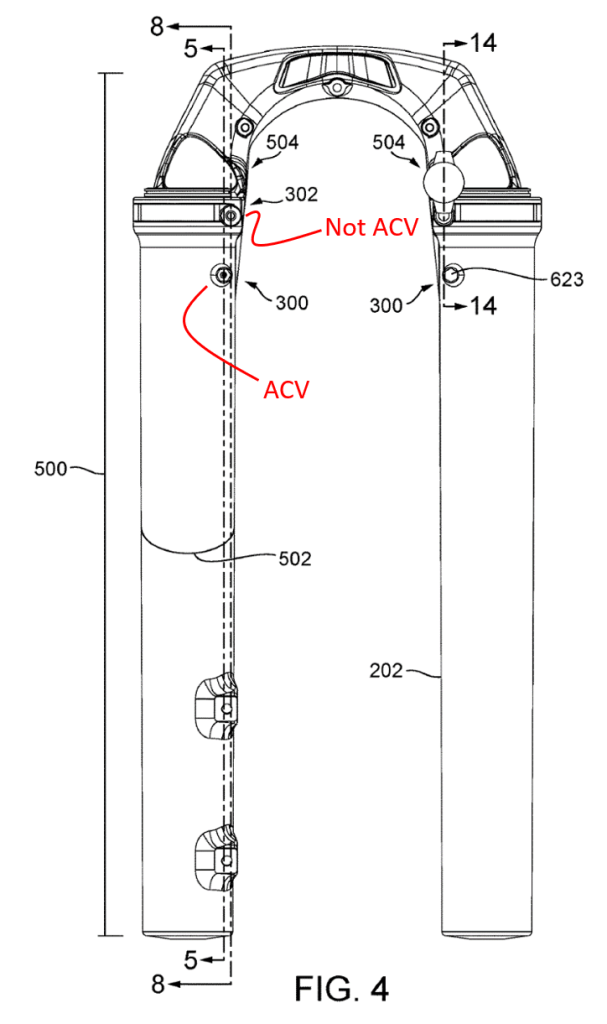
FIGs. 4 and 5 show the lowers with two vents 300. These are the focus of the claims in this document and appear to be slightly different than the currently available ACV. There are also two other valves 302 right above the ACVs, but I’ll get into that later. Circle 6 is the vent.

Let’s take a closer look at these vents. FIGs. 6 and 7 show a cross-section in the middle of two variations of the bleeders. I’ll start with FIG. 7 because this is a non-adjustable version, and very likely what is already seen on the current MRP lineup. If it’s not, then ’bout to learn today.

There’s an air pathway between the inner chamber of the fork leg tube and the atmosphere. There’s also a little ball 907 that blocks the air pathway, along with a little biasing spring 905 which presses the ball against seat 909. This whole assembly is set in place by the little threaded cap in green.
The spring pushes against a little ball at a pre-determined force from the factory. When the inner pressure reaches a certain level (such as during travel), determined by the spring force, the ball moves backward, lets air out, and that’s it.

The next one ←, FIG. 6., isn’t rocket surgery, which is the adjustable version. This is what the claims are aimed at. The spring is located between the adjuster 910 and the ball 906. This one works exactly the same as prior, but the adjuster can be moved in and out with a little hex key to load and unload the spring/ball.
The rotation of the… adjuster 910 may change the effective length of the first spring 904, thereby changing the pressure necessary to open the release valve 300, which is the release valve threshold.
I rarely, if ever, do any technology comparison, but I know I’ll get a question about Fox’s and Rockshox’s bleeders. Fox’s are buttons and are not automatic nor user-adjustable. You just press a button and they let air through. Rockshox’s are threaded plugs you can take out to let air pass through. Again, not automatic and not user-adjustable. You can find plenty of that info on the interwebs.
Fluid Injection
Why: Over time, friction can increase between these parts as dust or debris… wear or damage from the riding environment… lubricant introduced during assembly breaks down… lubrication may tend to migrate away from this local region under the influence of gravity and also due to lubrication transport via the stanchion surface past the mate areas… friction can cause the shock absorber parts to resist compression and extension.. that negatively affects a rider’s experience. If a rider experiences increased friction when away from his or her home shop, this can lead to frustration.
Let’s move on to FIGs. 8 and 9, which show the other little valve sitting just above the bleeders. This is called the ‘Fluid Introduction Valve’ (that’s what my wife calls me). Does this look a little familiar? Kind of a flipped version of the bleeder we just talked about.

FIG. 9 shows yet another channel, though this is configured to move fluid rather than air (I know air is a fluid, you don’t need to tell me). Again, we’ve got a spring biasing a little ball against seat 608 keeping the channel closed.
We’ve also got this plug 627, which threads into place to keep the channel closed. That plug can be removed for the plunger shown next.
I’d like to point out that the plug is not threaded into the fork itself. If you fuck up these threads, it looks like it’s an easy replacement.
FIGs. 12 and 13 are the money shots of this new system. The Fluid Introduction Valve connects to a little plunger to inject that sweet, sweet lubrication into your tired fork. The location of the valve isn’t a mistake or by chance – it’s designed to inject fluid directly onto the foam ring.

There are a few figures showing a few configurations of the plunger and valve, but I’ll just show FIG. 17 because it has the least amount of shit going on, and they’re all pretty similar.
This shows a cross-section of the plunger. The blue hatched area is the foam ring. It’s pretty self-explanatory, but you just fill the plunger with whatever lubrication MRP uses and injected it straight to the foam ring. I assume that you likely won’t need to take it apart as often as others. I am jacked to the tits about that.

Shock
Why: Same as above
While it’s very interesting, the fact that MRP are working on a next-iteration fork isn’t groundbreaking – it’s basic business progress. That being said, FIG. 19 shows the possibility of a more impactful business move from MRP. We’re looking at what could be a new air shock from them, which departs from their current offering of coil-spring-only Hazzard.

The obvious component here is yet another Fluid Introduction Valve 2302, just like the fork prior to this.
I’m going to include FIGs. 21 and 22. Though they don’t really include much about the internals of this shock, these images are probably interesting for some of you to see if MRP are doing anything out of the ordinary. Keep in mind this could be a bullshit shock and only used as a general schematic for the document.
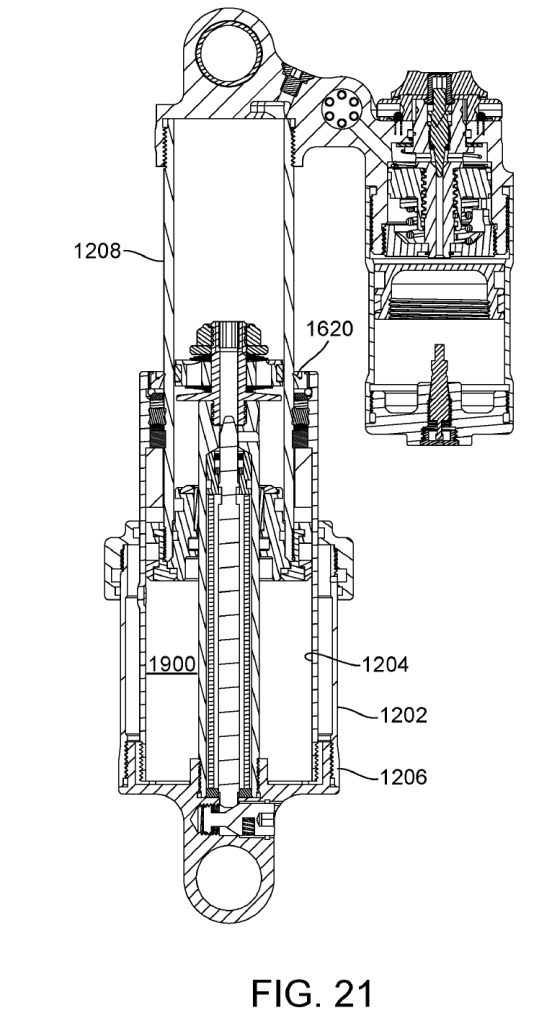
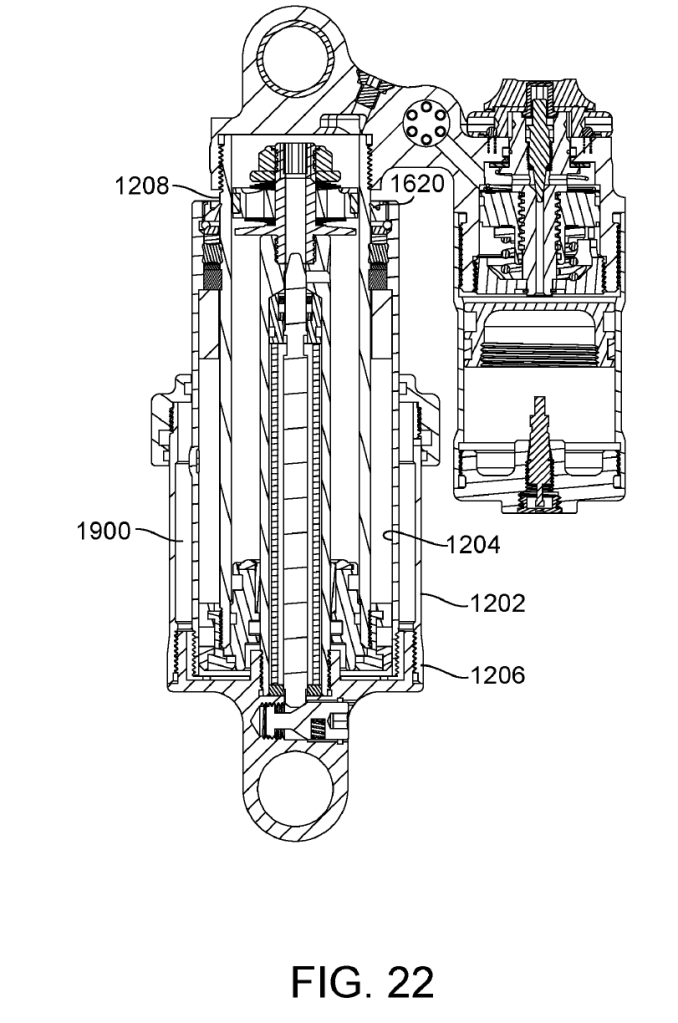
FIG. 24 is a cross-section 90⁰ relative to FIGs. 21 and 22. Again, the fancy thing here is the lubrication fluid is juicin’ the foam ring (blue) to keep things nice and slippery.

Conclusion
Well, ain’t this cool.
The updated ACV is pretty nifty. I’ll take a shot in the dark and assume this is being developed by MRP because it’s super easy to go from 4,800ft to 11,000ft on the Western Slope if you’re going from Grand Junction to the Mesa. They’re likely seeing and experiencing things other companies may not be – though Rockshox has the ability to do this riding around Zebulon Pike’s area.
It’s interesting to see both the current version and a new version in this document. I wonder if they’re still trying to dial in the adjustable version or if they’re doing some planned obsolescence-type stuff.
Personally, I rode a Fox 40 for a while, and I’m not 100% sure as to the performance gains from a bleeder, but I’m sure there are marginal gains to be had since these are on motos and are now being adopted by the MTB world. I’m just not good enough to notice.
With respect to the fluid injection system, I think I’d use the shit out of that. My fork is always losing oil from the lowers over time, and it’s just a pain in the ass to tear it apart to top it off. An injector would be incredible. I would love that.
I literally bought a bunch of adhesive injectors to squirt some lube under the seals from the top so I didn’t have to constantly tear my fork and dropper apart. In case you’re wondering, it works great. I use something like these.
Lastly, as new companies continue to enter certain markets, assuming the same number of consumers, market share is distributed. When someone buys this new MRP, Fox, Rockshox, and others are losing their share. I’m not convinced we’re anywhere near saturation levels, but it’s cool to see new players offering different options.
Very awesome, MRP. I’d love to give these a go one of these days.


Leave a Reply